Track 01: Pediatric Care
Pediatric care focuses on the health and well-being of infants, children, and adolescents. It encompasses preventive care, early diagnosis, and treatment of illnesses to ensure healthy growth and development. Pediatricians play a crucial role in managing acute and chronic conditions, providing vaccinations, and guiding parents on nutrition, hygiene, and emotional support. This field addresses both physical and psychological aspects of child health, ensuring holistic care from birth to adulthood. Pediatric care also emphasizes early intervention for developmental delays, behavioral issues, and genetic conditions, promoting lifelong health and reducing the risk of complications in later life stages.
Related Conferences: Pediatrics Conference | Pediatrics Conference 2026 | Neonatology Congress | Child Health Summit | Neonatology Conference | World Pediatric Congress | Pediatric Healthcare Conference | Global Pediatrics Meeting | Pediatricians Conference | International Pediatrics Event | Pediatric Conferences | Pediatric CME (Continuing Medical Education)
Track 02: Neonatology & Perinatology Advances
Neonatology and perinatology focus on the care of newborns, particularly those born prematurely or with complex medical conditions. Advances in this field have led to improved survival rates for preterm and low birth weight infants through innovations in respiratory support, neonatal nutrition, and infection control. Perinatology involves managing high-risk pregnancies to prevent complications affecting both mother and child. Research continues to enhance fetal monitoring, genetic screening, and non-invasive prenatal diagnostics. Together, neonatology and perinatology contribute to better outcomes for newborns by integrating cutting-edge technology with specialized clinical expertise in maternal and neonatal care.
Related Conferences: Pediatrics Conference | Pediatrics Conference 2026 | Neonatology Congress | Child Health Summit | Neonatology Conference | World Pediatric Congress | Pediatric Healthcare Conference | Global Pediatrics Meeting | Pediatricians Conference | International Pediatrics Event | Pediatric Conferences | Pediatric CME (Continuing Medical Education)
Track 03: Pediatric Infectious Diseases & Vaccinology
Pediatric infectious diseases involve the diagnosis, treatment, and prevention of infections in children, including bacterial, viral, fungal, and parasitic illnesses. With the rise of antibiotic resistance and emerging pathogens, this field is critical in global child health. Vaccinology, a key component, focuses on developing and administering vaccines to prevent childhood diseases like measles, polio, and whooping cough. Continuous advancements in vaccine technology, such as mRNA vaccines, have revolutionized disease prevention. Pediatric infectious disease specialists also address outbreaks, travel-related illnesses, and immunization strategies, playing a vital role in safeguarding public health and reducing childhood mortality worldwide.
Related Conferences: Pediatrics Conference | Pediatrics Conference 2026 | Neonatology Congress | Child Health Summit | Neonatology Conference | World Pediatric Congress | Pediatric Healthcare Conference | Global Pediatrics Meeting | Pediatricians Conference | International Pediatrics Event | Pediatric Conferences | Pediatric CME (Continuing Medical Education)
Track 04: Pediatric Pulmonology
Pediatric pulmonology deals with respiratory health in children, managing conditions such as asthma, cystic fibrosis, pneumonia, and bronchopulmonary dysplasia. Early diagnosis and treatment are essential to prevent long-term complications and improve quality of life. Pediatric pulmonologists use specialized techniques like bronchoscopy, pulmonary function tests, and sleep studies to evaluate lung health. Advances in inhalation therapies, personalized treatment plans, and genetic research contribute to better management of chronic respiratory diseases. The field also emphasizes education for families on environmental triggers, medication adherence, and lifestyle modifications, ensuring comprehensive respiratory care for children from infancy through adolescence.
Related Conferences: Pediatrics Conference | Pediatrics Conference 2026 | Neonatology Congress | Child Health Summit | Neonatology Conference | World Pediatric Congress | Pediatric Healthcare Conference | Global Pediatrics Meeting | Pediatricians Conference | International Pediatrics Event | Pediatric Conferences | Pediatric CME (Continuing Medical Education)
Track 05: Pediatric Cardiology
Pediatric cardiology specializes in diagnosing and treating heart conditions in infants, children, and adolescents. It encompasses congenital heart defects, arrhythmias, cardiomyopathies, and acquired heart diseases like Kawasaki disease. Innovations in non-invasive imaging techniques, such as echocardiography and cardiac MRI, enable accurate diagnosis. Interventional cardiology procedures, including catheter-based repairs, reduce the need for open-heart surgery. Early detection and advanced treatment strategies have significantly improved survival rates and quality of life for children with heart disorders. Pediatric cardiologists work closely with surgeons, geneticists, and other specialists to provide lifelong cardiac care, from prenatal diagnosis to adult congenital heart disease management.
Related Conferences: Pediatrics Conference | Pediatrics Conference 2026 | Neonatology Congress | Child Health Summit | Neonatology Conference | World Pediatric Congress | Pediatric Healthcare Conference | Global Pediatrics Meeting | Pediatricians Conference | International Pediatrics Event | Pediatric Conferences | Pediatric CME (Continuing Medical Education)
Track 06: Pediatric Nephrology
Pediatric nephrology addresses kidney-related disorders in children, including congenital anomalies, nephrotic syndrome, urinary tract infections, and chronic kidney disease. Early diagnosis and management are crucial to prevent progression to kidney failure. Pediatric nephrologists utilize advanced diagnostic tools like renal biopsies, imaging, and genetic testing to guide treatment. They also manage dialysis and kidney transplantation in children with end-stage renal disease. Focus areas include fluid and electrolyte balance, hypertension, and metabolic disorders affecting renal health. Research in pediatric nephrology continues to explore regenerative medicine, immune therapies, and personalized care strategies to improve outcomes for children with kidney conditions.
Related Conferences: Pediatrics Conference | Pediatrics Conference 2026 | Neonatology Congress | Child Health Summit | Neonatology Conference | World Pediatric Congress | Pediatric Healthcare Conference | Global Pediatrics Meeting | Pediatricians Conference | International Pediatrics Event | Pediatric Conferences | Pediatric CME (Continuing Medical Education)
Track 07: Pediatric Gastroenterology
Pediatric gastroenterology deals with digestive system disorders in children, including conditions like inflammatory bowel disease (IBD), celiac disease, gastroesophageal reflux, and liver disorders. Pediatric gastroenterologists provide specialized care using endoscopy, colonoscopy, and advanced imaging to diagnose gastrointestinal problems. Nutritional support plays a key role in managing these conditions, ensuring proper growth and development. Advances in genetic research and microbiome studies have enhanced the understanding of gastrointestinal diseases in children. Treatments now include targeted biologic therapies and personalized nutrition plans. The field also emphasizes early intervention to prevent long-term complications and improve the quality of life for young patients.
Related Conferences: Pediatrics Conference | Pediatrics Conference 2026 | Neonatology Congress | Child Health Summit | Neonatology Conference | World Pediatric Congress | Pediatric Healthcare Conference | Global Pediatrics Meeting | Pediatricians Conference | International Pediatrics Event | Pediatric Conferences | Pediatric CME (Continuing Medical Education)
Track 08: Pediatric Orthopedics
Pediatric orthopedics focuses on diagnosing and treating musculoskeletal disorders in children, including congenital deformities, growth abnormalities, fractures, and scoliosis. Unlike adults, children’s bones and joints are still developing, requiring specialized approaches to treatment. Pediatric orthopedic surgeons use both surgical and non-surgical methods to correct skeletal issues, ensuring proper growth and mobility. Advances in imaging, minimally invasive surgery, and growth modulation techniques have improved outcomes significantly. The field also addresses sports injuries, neuromuscular disorders, and rehabilitation. Pediatric orthopedists work closely with physical therapists, prosthetists, and other healthcare providers to promote mobility, function, and quality of life in children.
Related Conferences: Pediatrics Conference | Pediatrics Conference 2026 | Neonatology Congress | Child Health Summit | Neonatology Conference | World Pediatric Congress | Pediatric Healthcare Conference | Global Pediatrics Meeting | Pediatricians Conference | International Pediatrics Event | Pediatric Conferences | Pediatric CME (Continuing Medical Education)
Track 09: Artificial Intelligence & Robotics in Pediatrics
Artificial Intelligence (AI) and robotics are transforming pediatric healthcare by enhancing diagnostics, treatment planning, and surgical precision. AI-driven tools can analyze medical data to identify patterns, predict outcomes, and support early diagnosis of complex diseases. Robotic-assisted surgeries provide minimally invasive options with increased accuracy, reduced recovery times, and less pain for pediatric patients. Virtual assistants and telemedicine platforms using AI improve healthcare accessibility and patient monitoring. In pediatrics, AI is also being applied to personalized medicine, medical imaging interpretation, and predictive analytics in neonatal care. These technologies promise to revolutionize child healthcare, ensuring safer, faster, and more precise medical interventions.
Related Conferences: Pediatrics Conference | Pediatrics Conference 2026 | Neonatology Congress | Child Health Summit | Neonatology Conference | World Pediatric Congress | Pediatric Healthcare Conference | Global Pediatrics Meeting | Pediatricians Conference | International Pediatrics Event | Pediatric Conferences | Pediatric CME (Continuing Medical Education)
Track 10: Pediatric Genomics & Precision Medicine
Pediatric genomics and precision medicine involve tailoring medical care to each child’s genetic makeup. Advances in genetic sequencing have made it possible to identify rare genetic disorders, congenital anomalies, and predispositions to various diseases early in life. Precision medicine uses this information to guide targeted treatments, minimize side effects, and improve health outcomes. In oncology, cardiology, and neurology, genetic insights are helping develop personalized therapies for children with complex conditions. Ethical considerations, genetic counseling, and data privacy are important aspects of this emerging field. Pediatric genomics holds immense potential for revolutionizing diagnosis, treatment, and prevention in child healthcare.
Related Conferences: Pediatrics Conference | Pediatrics Conference 2026 | Neonatology Congress | Child Health Summit | Neonatology Conference | World Pediatric Congress | Pediatric Healthcare Conference | Global Pediatrics Meeting | Pediatricians Conference | International Pediatrics Event | Pediatric Conferences | Pediatric CME (Continuing Medical Education)
Track 11: Nutrition, Obesity & Metabolic Disorders in Pediatrics
Proper nutrition is vital for a child's growth, development, and long-term health. Pediatric nutrition focuses on preventing and managing malnutrition, obesity, and metabolic disorders such as diabetes and lipid abnormalities. Childhood obesity is a growing global concern, leading to an increased risk of cardiovascular disease, diabetes, and orthopedic problems. Pediatricians emphasize early interventions, promoting healthy eating habits, physical activity, and behavior modifications. Research in pediatric metabolism explores genetic, hormonal, and environmental factors contributing to metabolic dysfunction. Advances in this field aim to create individualized dietary plans and therapies to address nutritional deficiencies and prevent chronic diseases in children.
Related Conferences: Pediatrics Conference | Pediatrics Conference 2026 | Neonatology Congress | Child Health Summit | Neonatology Conference | World Pediatric Congress | Pediatric Healthcare Conference | Global Pediatrics Meeting | Pediatricians Conference | International Pediatrics Event | Pediatric Conferences | Pediatric CME (Continuing Medical Education)
Track 12: Pediatric Neurology
Pediatric neurology specializes in diagnosing and managing neurological disorders in children, including epilepsy, cerebral palsy, autism spectrum disorders, migraines, and neuromuscular diseases. Early intervention is critical to support cognitive development, motor skills, and quality of life. Pediatric neurologists use advanced imaging, genetic testing, and neurophysiological studies to guide treatment. Therapies may include medication, physical rehabilitation, and behavioral therapies tailored to the child’s developmental needs. Research in pediatric neurology continues to explore neuroplasticity, brain development, and innovative treatments like gene therapy and neurostimulation. The field plays a key role in improving outcomes for children with complex neurological conditions.
Related Conferences: Pediatrics Conference | Pediatrics Conference 2026 | Neonatology Congress | Child Health Summit | Neonatology Conference | World Pediatric Congress | Pediatric Healthcare Conference | Global Pediatrics Meeting | Pediatricians Conference | International Pediatrics Event | Pediatric Conferences | Pediatric CME (Continuing Medical Education)
Track 13: Pediatric Medicine
Pediatric medicine is dedicated to the healthcare of infants, children, and adolescents. It involves preventive care, early diagnosis, and management of acute and chronic illnesses specific to young patients. Pediatricians focus on monitoring growth, development, and immunizations while addressing a wide range of medical conditions. They work closely with families to provide education on nutrition, safety, and emotional well-being. Pediatric medicine integrates advances in diagnostics, therapeutics, and technology to deliver personalized and comprehensive care. Research in pediatric medicine continues to improve treatment strategies, reduce child mortality, and enhance the quality of life for children globally through better healthcare services.
Related Conferences: Pediatrics Conference | Pediatrics Conference 2026 | Neonatology Congress | Child Health Summit | Neonatology Conference | World Pediatric Congress | Pediatric Healthcare Conference | Global Pediatrics Meeting | Pediatricians Conference | International Pediatrics Event | Pediatric Conferences | Pediatric CME (Continuing Medical Education)
Track 14: Neonatology
Neonatology is a subspecialty of pediatrics focusing on the medical care of newborns, particularly those who are premature, critically ill, or have congenital anomalies. Neonatologists manage complex conditions such as respiratory distress, infections, birth defects, and metabolic disorders in newborns. Advances in neonatal care, including non-invasive ventilation, advanced monitoring, and nutritional support, have significantly improved survival and developmental outcomes. Neonatal intensive care units (NICUs) provide specialized environments for high-risk infants, offering round-the-clock care by multidisciplinary teams. Neonatology also emphasizes parental involvement and long-term follow-up to support growth, development, and quality of life for newborns after hospital discharge.
Related Conferences: Pediatrics Conference | Pediatrics Conference 2026 | Neonatology Congress | Child Health Summit | Neonatology Conference | World Pediatric Congress | Pediatric Healthcare Conference | Global Pediatrics Meeting | Pediatricians Conference | International Pediatrics Event | Pediatric Conferences | Pediatric CME (Continuing Medical Education)
Track 15: Child Health
Child health encompasses the physical, emotional, and social well-being of children from infancy through adolescence. It involves preventive care, early detection of diseases, vaccinations, and health education. Maintaining good child health requires monitoring growth, nutrition, mental health, and developmental milestones. Environmental factors, access to healthcare, and socio-economic conditions significantly impact child health outcomes. Pediatric healthcare providers work collaboratively with families to promote healthy lifestyles and prevent diseases. Advances in child health research focus on reducing mortality, managing chronic illnesses, and improving healthcare access globally. Emphasizing holistic care ensures children grow into healthy, productive adults with a strong foundation.
Related Conferences: Pediatrics Conference | Pediatrics Conference 2026 | Neonatology Congress | Child Health Summit | Neonatology Conference | World Pediatric Congress | Pediatric Healthcare Conference | Global Pediatrics Meeting | Pediatricians Conference | International Pediatrics Event | Pediatric Conferences | Pediatric CME (Continuing Medical Education)
Track 16: Pediatric Nursing
Pediatric nursing specializes in the care of infants, children, and adolescents, providing support in various healthcare settings such as hospitals, clinics, and community centers. Pediatric nurses play a crucial role in monitoring vital signs, administering medications, assisting in treatments, and educating families about ongoing care. They address the unique physical and emotional needs of children, using age-appropriate communication and comforting techniques. Pediatric nurses collaborate closely with pediatricians, surgeons, and therapists to deliver comprehensive, family-centered care. Their responsibilities include managing chronic conditions, acute illnesses, and developmental care. Continuous education and compassion are key to pediatric nursing, ensuring safe and effective healthcare delivery.
Related Conferences: Pediatrics Conference | Pediatrics Conference 2026 | Neonatology Congress | Child Health Summit | Neonatology Conference | World Pediatric Congress | Pediatric Healthcare Conference | Global Pediatrics Meeting | Pediatricians Conference | International Pediatrics Event | Pediatric Conferences | Pediatric CME (Continuing Medical Education)
Track 17: Pediatric Surgery
Pediatric surgery involves the surgical care of infants, children, and adolescents, addressing congenital anomalies, injuries, tumors, and other surgical conditions. Pediatric surgeons specialize in procedures tailored to the unique anatomical and physiological needs of growing children. Minimally invasive techniques, such as laparoscopy, have revolutionized pediatric surgical care by reducing recovery times and improving outcomes. Common pediatric surgeries include correction of hernias, appendectomies, congenital heart defect repairs, and organ transplants. Pediatric surgeons work closely with anesthesiologists, pediatricians, and intensive care teams to ensure safe perioperative management. The field continues to evolve with advancements in surgical technology, robotics, and precision-based interventions.
Related Conferences: Pediatrics Conference | Pediatrics Conference 2026 | Neonatology Congress | Child Health Summit | Neonatology Conference | World Pediatric Congress | Pediatric Healthcare Conference | Global Pediatrics Meeting | Pediatricians Conference | International Pediatrics Event | Pediatric Conferences | Pediatric CME (Continuing Medical Education)
Track 18: Pediatric Emergency Medicine
Pediatric emergency medicine focuses on the immediate evaluation and treatment of acute illnesses and injuries in children. Pediatric emergency physicians are trained to manage a wide range of conditions, from minor injuries to life-threatening emergencies such as severe infections, trauma, and cardiac issues. Emergency care requires rapid diagnosis, stabilization, and specialized interventions, often in high-pressure situations. Pediatric emergency departments are equipped to handle the unique physiological and emotional needs of children and their families. Advances in resuscitation techniques, trauma care, and pediatric critical care support have significantly improved survival rates. Training in pediatric emergency medicine emphasizes swift, compassionate, and effective care.
Related Conferences: Pediatrics Conference | Pediatrics Conference 2026 | Neonatology Congress | Child Health Summit | Neonatology Conference | World Pediatric Congress | Pediatric Healthcare Conference | Global Pediatrics Meeting | Pediatricians Conference | International Pediatrics Event | Pediatric Conferences | Pediatric CME (Continuing Medical Education)
Track 19: Pediatric Pharmacology
Pediatric pharmacology studies the safe and effective use of medications in children, recognizing that their metabolic processes differ from adults. It focuses on appropriate drug dosing, formulation, absorption, and side effect management for infants, children, and adolescents. Pediatric pharmacologists develop child-specific treatments, including liquid suspensions and chewable tablets, to ensure compliance and efficacy. Research addresses age-related variations in drug metabolism, drug interactions, and long-term effects of medications on growth and development. Advances in pharmacogenomics are enhancing personalized medicine in pediatrics. Safe prescribing practices, regulatory approvals, and clinical trials in pediatric populations are essential for advancing pediatric pharmacology.
Related Conferences: Pediatrics Conference | Pediatrics Conference 2026 | Neonatology Congress | Child Health Summit | Neonatology Conference | World Pediatric Congress | Pediatric Healthcare Conference | Global Pediatrics Meeting | Pediatricians Conference | International Pediatrics Event | Pediatric Conferences | Pediatric CME (Continuing Medical Education)
Track 20: Pediatric Diseases
Pediatric diseases encompass a wide range of medical conditions that affect infants, children, and adolescents. These include infectious diseases like measles and influenza, chronic illnesses such as asthma and diabetes, congenital disorders, genetic conditions, and developmental disabilities. Pediatric diseases require specialized approaches to diagnosis and treatment due to children’s unique physiological and developmental needs. Preventive measures like vaccination and health education play a crucial role in reducing disease incidence. Advances in medical research continue to improve understanding of pediatric illnesses, leading to better treatment options and improved patient outcomes. Early intervention and comprehensive care are vital for managing pediatric diseases effectively.
Related Conferences: Pediatrics Conference | Pediatrics Conference 2026 | Neonatology Congress | Child Health Summit | Neonatology Conference | World Pediatric Congress | Pediatric Healthcare Conference | Global Pediatrics Meeting | Pediatricians Conference | International Pediatrics Event | Pediatric Conferences | Pediatric CME (Continuing Medical Education)
Track 21: Pediatric Treatment
Pediatric treatment involves managing illnesses, injuries, and developmental conditions in children using age-appropriate medical interventions. It includes medication management, surgical procedures, physical therapy, behavioral therapy, and nutritional support. Pediatric treatment emphasizes the child's growth and developmental stages, requiring careful consideration of dosage, therapeutic techniques, and emotional care. Collaboration between healthcare providers, families, and caregivers is essential for successful treatment outcomes. Advances in pediatric medicine have introduced innovative treatments, including gene therapy, targeted medications, and minimally invasive surgeries. Preventive care, early diagnosis, and tailored treatment plans help minimize complications and promote long-term health. Continuous research aims to refine pediatric treatment protocols for better efficacy and safety.
Related Conferences: Pediatrics Conference | Pediatrics Conference 2026 | Neonatology Congress | Child Health Summit | Neonatology Conference | World Pediatric Congress | Pediatric Healthcare Conference | Global Pediatrics Meeting | Pediatricians Conference | International Pediatrics Event | Pediatric Conferences | Pediatric CME (Continuing Medical Education)
The Pediatrics and Neonatology market is a vital segment of the global healthcare industry, driven by the increasing demand for specialized healthcare services for infants, children, and adolescents. According to market research, the global pediatric healthcare market is projected to reach over USD 520 billion by 2030, growing at a steady compound annual growth rate (CAGR) of approximately 6-7%. Factors contributing to this growth include rising birth rates, advancements in medical technology, increased awareness of child health, and improvements in early diagnosis and treatment of pediatric diseases.
The neonatology sector is expanding significantly due to the growing prevalence of preterm births, congenital disorders, and neonatal infections. Innovations in neonatal intensive care, such as advanced respiratory support, minimally invasive surgeries, and improved neonatal nutrition, are further boosting this market. The World Health Organization reports nearly 15 million preterm births annually, highlighting the critical need for advanced neonatal services globally.
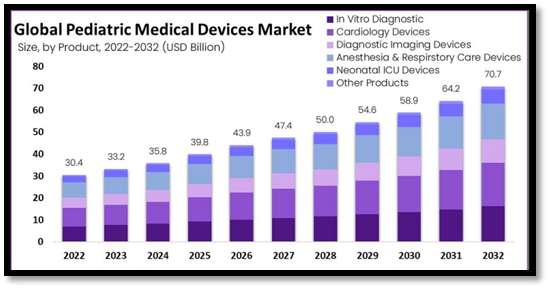
Emerging economies are witnessing increased investments in pediatric and neonatal care infrastructure, driven by government initiatives, improved healthcare access, and growing medical tourism. Technological advancements, including telemedicine, pediatric robotic surgeries, and AI-driven diagnostics, are revolutionizing pediatric and neonatal healthcare delivery.
Pharmaceutical and biotechnology companies are also focusing on developing pediatric-specific formulations and vaccines, expanding the pediatric pharmacology segment. However, challenges such as limited pediatric clinical trials, high treatment costs, and workforce shortages in specialized pediatric and neonatal care persist.
The market is highly competitive, with key players including healthcare providers, medical device manufacturers, pharmaceutical companies, and research organizations actively collaborating to innovate and improve care standards. Conferences, workshops, and continuous medical education are playing a crucial role in knowledge exchange and professional development, further driving growth in the pediatrics and neonatology market worldwide.

 Anthony F Porto
 William-E-Feeman
 Dawn S Hartfield
 Cristina-Florescu
 Satoru-Takeno
 Christy-Cotner
 Robert E Cilley
 Raimund-Erbel
 Samir K Ballas
 Hilario-Noveno
 Gwenyth Fischer
 Laura Odom
 Yousry-el-Moazamy
 Bruce-Leonard
 Mary Niu
 M-Eileen-Walsh
 Ronish Gupta